Discover Along The Journey:
Explore the key stops, peaceful temples and sacred locations on the road toward Hayuliang.
Road-Window Planner
Hayuliang's weather and road accessibility are seasonal. Select a seasonal filter below to view month accessibility details and travel quality.
How To Reach
Explore the flight hubs, railheads and winding mountain highways connecting Hayuliang to the rest of the country.
Air Connection Details
Air travel requires flying to nearby Assam or Tezu and completing the journey by mountain highway.
Dibrugarh Airport (MHB) — Mohanbari
Primary Airport • ~245 km from Hayuliang
| Route / Origin | Airlines | Duration & Frequency |
|---|---|---|
| New Delhi (DEL) | IndiGo, Air India | ~3h 05m (Daily Direct) |
| Kolkata (CCU) | IndiGo, Air India | ~1h 45m (Daily Direct) |
| Guwahati (GAU) | IndiGo, Alliance Air | ~1h 10m (Multiple daily) |
| Bengaluru / Mumbai | IndiGo, Air India (via GAU/CCU) | ~5h to 7h (Daily 1-stop) |
Tezu Airport (TEI)
Closest Airport • ~100 km from Hayuliang
| Route / Origin | Airlines | Duration & Frequency |
|---|---|---|
| Kolkata (CCU) | Alliance Air | ~2h (Direct / 4x weekly) |
| Guwahati (GAU) | Alliance Air, Flybig | ~1h 30m (Direct / 3x weekly) |
| Dibrugarh (MHB) | Alliance Air | ~35m (Shuttle / 3x weekly) |
Rail Connections
New Tinsukia Junction (NTSK) (~175 km from Hayuliang) is the main railhead. It links to major hubs across India (Delhi, Kolkata, Guwahati, Bangalore) via daily Rajdhani, Kamrup Express and Brahmaputra Mail.
Onward travel from Tinsukia is via road. Taxis and local shared vehicles are easily available at the station.
Road Link From Tezu & Tinsukia
The Lohit and Anjaw valleys are connected via the NH-115 (Tinsukia to Tezu, ~120 km) and the winding mountain highway from Tezu to Hayuliang (~100 km). Expect a drive of 4 to 5 hours from Tezu depending on road work and weather clearance.
-
Shared
passenger Sumos:
Depart daily from Tinsukia and Tezu Sumo counters.
- Tezu to Hayuliang: Early morning (~5:30 AM - 7:00 AM). Fares run ~₹500 - ₹600 per seat.
- Tinsukia to Hayuliang: Departs ~6:00 AM. Fares run ~₹800 - ₹1,000 per seat.
- Private 4WD SUVs: Heavy-duty vehicles like Bolero, Scorpio, or Sumo can be chartered from Tezu or Tinsukia. Fares run ~₹6,000 - ₹9,000 per day including fuel, depending on the season and stops. Recommended for flexible stopping and baggage safety.
- Biking & Self-Driving: The route is incredibly scenic, passing through Hawa Camp and Parshuram Kund. Biker expeditions are popular, but require experienced riders due to steep climbs, sharp blind curves and landslides near Tidding. Ensure your vehicle has decent ground clearance.
Sources: Anjaw District Portal and Arunachal Tourism circuit notes.
Permits & Guidelines
All travellers to Arunachal Pradesh require official permits. Review guidelines below to ensure a smooth, lawful and respectful journey.
Permits & Regulations
Arunachal Pradesh permit rules apply. Confirm guidelines to ensure a smooth, lawful journey.
Indian Nationals: Require an Inner Line Permit (ILP). You can apply online or obtain it at designated state offices in Guwahati, Kolkata, Delhi, or Tezpur.
Foreign Nationals: Require a Protected Area Permit (PAP) or Restricted Area Permit (RAP).
Verify guidelines and apply on the official Arunachal Tourism permit portal.
Practical Essentials (Carry Margin)
Hayuliang is remote. Travel notes should protect your plans from false certainty: carry margins for cash, fuel and time.
Cash & Connectivity: Carry enough hard cash. ATMs in Khupa and Hayuliang are unreliable and network connectivity is highly variable.
Lodging buffer: Confirm lodging before leaving Tezu. Ampani Lodge at Khupa and other guest houses have limited rooms. Always keep a buffer day for road blocks or heavy rain.
How To Arrive As A Guest, Not A Consumer
Hayuliang rewards time and respect. Remote valley culture is fragile; a mindful traveler helps protect the local way of life.
Ask Before Photographing
Homes, rituals, weaving, food and festivals are not public sets. Ask clearly, accept no gracefully and never photograph sacred or private moments without permission.
Employ Local Guidance
Roads, weather, landslides, permits and trail conditions change quickly. Local drivers, homestay owners and guides are the best safety layer and keep income in the valley.
Carry Waste Back
Anjaw's remoteness is exactly why plastic, batteries, bottles and wet wipes cannot be treated casually. Pack out what you bring in, especially on treks and village visits.
Respect Cultural Boundaries
The Digaru Mishmi and Miju Mishmi relationship with forests, animals and sacred sites is a living belief, not folklore for travellers. Treat customs and oral histories with restraint.
Stay On Agreed Routes
Do not wander into fields, forests, sacred sites, or village spaces without a host or guide. Some places are private, seasonal, or restricted for reasons travellers may not immediately see.
Pay Local Value Fairly
Use local homestays, guides, drivers, craftspeople and food providers where possible. Remote hospitality takes real labour, fuel, time and knowledge, so bargain with care.
Good Travel Is Verified, Local And Flexible
Remote travel fails when plans assume city-level certainty. The safer approach is to make each travel day checkable.
Before Leaving Tinsukia
- Confirm ILP or PAP requirements and carry printed or offline copies.
- Check the vehicle, fuel plan, cash and lodging contact numbers.
- Tell family or hosts the intended halt and fallback plan.
Before Leaving Tezu
- Ask drivers or local contacts about the current Tidding-Hayuliang road condition.
- Start early enough to avoid arriving after dark.
- Confirm room availability at Hayuliang or Khupa.
Before Going Farther East
- Reconfirm conditions toward Hawai, Walong, Kibithu, Dong, or Kaho.
- Carry warm layers even when the lower valley feels mild.
- Keep at least one spare day for rain, landslide, road work, or vehicle issues.
Sources: Arunachal Tourism travel guidance and Anjaw tourist places route summaries.
Key Stops Along The Way
The journey to Hayuliang takes you from the Assam-Arunachal boundary, through historic temples, river valleys and mountain viewpoints. Here are the highlights you will discover along the route.

Golden Pagoda
A beautiful Burmese-style Buddhist temple located in Namsai, famous for its golden structure, peaceful gardens and spiritual atmosphere.

Tezu
A picturesque town and the headquarters of Lohit district, known for its scenic beauty, local Mishmi culture and the nearby Tezu airport.

Hawa Camp
A popular stopover point offering panoramic views of the Lohit river valley below and the surrounding mountain ranges.

Parshuram Kund
A sacred Hindu pilgrimage site situated on the Brahmaputra plate in the lower reaches of the Lohit River, where devotees take a holy dip.

Brahmakund
Another historic and sacred water pool located near Parshuram Kund, steeped in mythological significance.

Khupa
A scenic village forming the twin semi-urban stretch with Hayuliang, housing key health infrastructure and local accommodation options.

Tidding
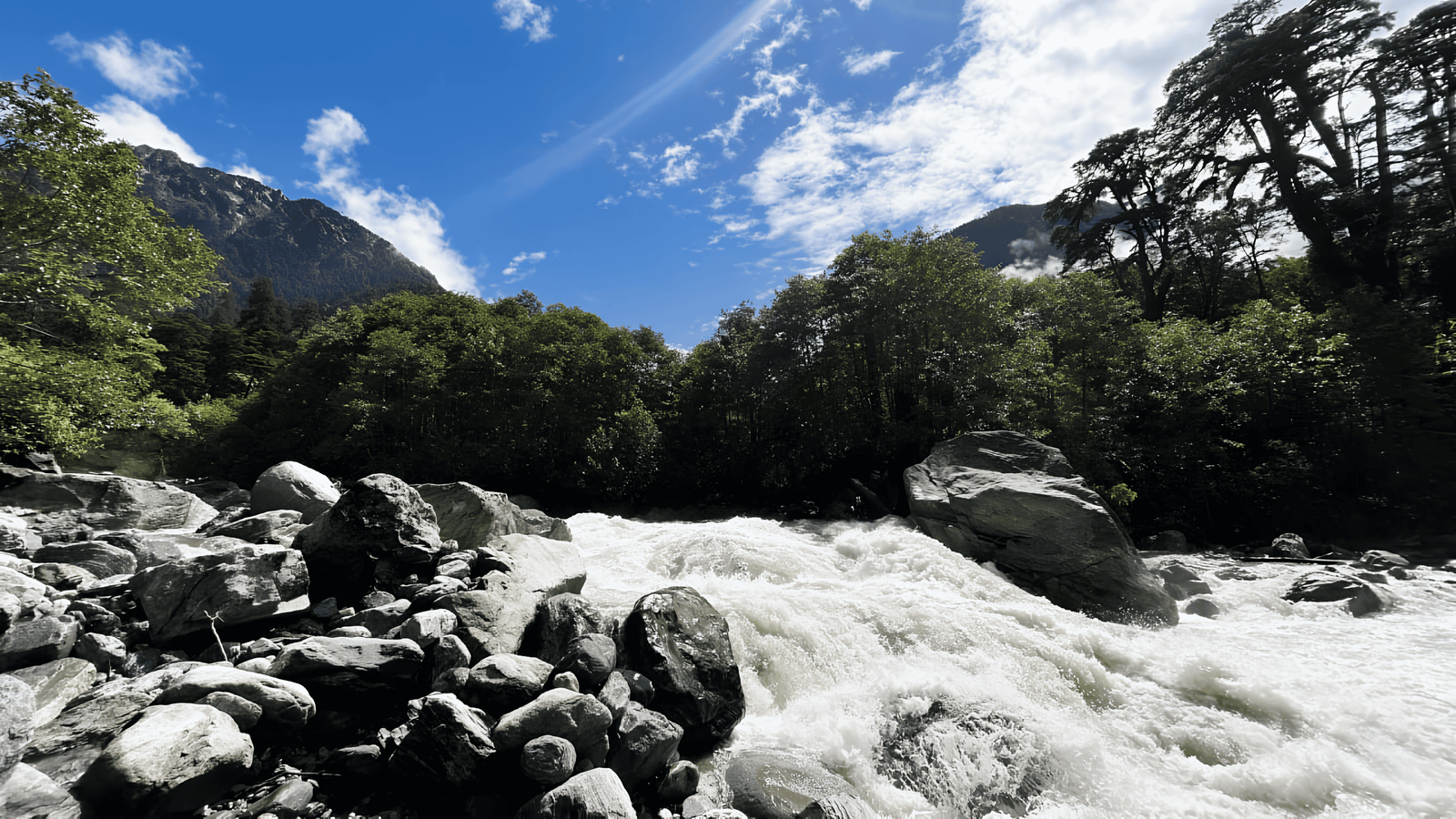
A major landmark and entry point to Anjaw district, known for its clear, rushing river and the iconic bridge.

Hayuliang
The subdivision headquarters and final destination of this route, known as the "place of respite" where the Lohit and Dalai rivers meet.